
How Movements Speak to the Collective Unconscious
The Jungian Psychology Behind Starting a Movement

The success or failure of a movement or brand will largely depend on a leader’s understanding of human psychology. Entrepreneurs often overcomplicate their messaging, failing to realize that their sales copy, marketing, and branding are appealing to him/her, not to the people who need their solutions the most.
In this article, I will attempt to deliver Carl Jung’s life work of human psychology in the context of building YOUR brand and YOUR movement. Specifically, I’ll elaborate on 4 key points of Jungian psychology and how these principles will help YOU attract followers to your movement. And, as an added bonus, I’ll also share how Carl Jung’s psychological principles can help YOU be a more authentic, fulfilled, and self-actualized leader.
____________________________________________________________________________
Introduction to Carl Jung (1875 - 1961)
But before we dive in, who is Carl Jung, and why should you and I care? Jung’s work is cited almost as frequently as Freud’s, and his philosophy is deeply embedded in the work of Jordan Peterson. Jung and Freud were contemporaries and collaborators (despite having their disagreements).
He introduced the influential concepts of collective unconscious, archetypes, and individuation, each of which we will explore as they relate to building movements. In short, Jung’s work explored how unconscious processes influence behavior, creativity, and spirituality–so for you and I who have a vested interest in understanding why people do what they do, Jung’s work is worth its weight in gold.
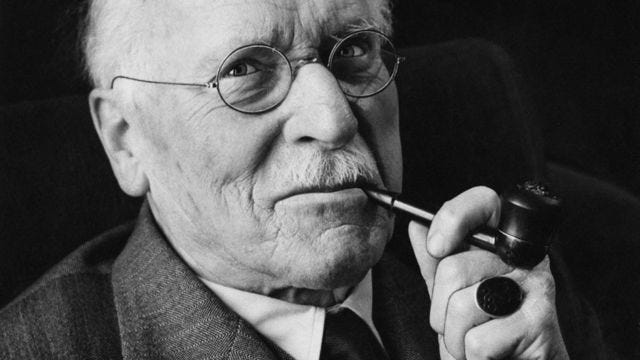
Understanding Jungian psychology opens a window into the human experience, and elucidates why humans act the way they do. So, without further ado, here are four key elements of Jungian theory and how YOU can utilize them in your movement:
____________________________________________________________________________
Individuation: Our Pursuit of Self
Individuation, according to Carl Jung, is the process by which a person becomes their most authentic self by integrating the various aspects of their psyche into a unified whole. It is a lifelong journey of self-discovery, where individuals seek to become their truest self. This process allows individuals to move beyond societal expectations or superficial roles and instead live in harmony with their unique potential. Individuation is not merely about self-fulfillment but about achieving a balance that contributes to personal growth and a meaningful connection to the broader world. In short, individuation is the journey you, me, and the whole world goes through to discover ourselves and become who we know we are capable of becoming.
Integrating Individuation Into Your Movement
To build a successful movement, your messaging must resonate with the listener’s innate desire to actualize their potential. Movements that align their messaging with the principles of individuation invite people to see themselves as protagonists in their own transformative journey. You can do this by framing participation in your movement as a path to self-discovery and personal growth. For example, campaigns that challenge followers to "become the best version of themselves" or "unleash their hidden potential" tap into the core of individuation, offering a deeper psychological incentive to join and contribute to the cause. After all, that’s what we’re all after! We long to become the best, most authentic versions of ourselves.
Therefore, effective marketing should reflect the values and aspirations of your audience, offering them an identity that feels authentic yet aspirational. As your movement grows, highlight stories of followers who have grown or transformed through adherence to your movement’s principles/practices. Doing so will provide proof of the movement’s alignment with the individuation process. Additionally, the messaging should appeal to both the conscious desire for change and the unconscious archetypes that drive human behavior. By positioning the movement as not just a collective mission, but as a deeply personal journey for each member, marketers can cultivate a sense of belonging and purpose, making the cause more compelling and sustainable over time.
Archetypes: The Symbols that Speak to Us All
Archetypes are universal symbols and patterns that reside in the collective unconscious: the shared aspects of the human psyche that all members of the human family experience. According to Carl Jung, these archetypes—such as the Hero, the Divine Mother, the Rebel Spirit, and the Bleeding Heart—shape how humans interpret the world and their place within it.
Archetypes appear in myths, stories, and cultural narratives across time and geography, serving as a kind of psychological blueprint that informs our values, desires, and sense of purpose. They evoke a deep resonance within us because they reflect fundamental truths about human existence and the shared struggles, triumphs, and aspirations of life.
Using Archetypes to Build Your Movement
If you’re anything like me, you’ve been fascinated by the ancient mythologies and lore of foreign peoples. Study them long enough and you’ll find certain recurring themes, imagery, and characters in every diverse culture. Krishna, Christ, and Quetzalcoatl each are divine embodiments of God incarnate. Likewise, Hercules, Gilgamesh, and Rama each showcase the “Hero’s Journey”.
In a world where people long for meaning, but lack the attention spans needed to dive deep into substance, you have to communicate intensely impactful meaning in small packages. This is best achieved through archetypes and symbols.
Movements that align with powerful archetypes tap into universal themes, creating messaging that feels familiar, emotionally compelling, and timeless. For example, if your movement is environmentalism, package you message through the symbology of the nurturing Mother Earth. Doing so will evoke gratitude, aesthetic beauty, and nostalgia. You wouldn’t litter because you wouldn’t disrespect the mother that gave you life. By subtly introducing archetypes that will resonate with the human family, you can craft stories, visuals, and calls to action effortlessly that align with their unconscious sense of identity.
Persona and the Shadow: The Light and Dark Side of the Self
In Jungian psychology, the Persona is the outward-facing mask we wear to navigate societal expectations. It allows us to project an image that aligns with cultural norms, helping us maintain relationships and succeed in social contexts. However, over-identification with the Persona can suppress our authentic selves, creating a disconnect between how we present to the world and who we truly are.
Complementing this is the Shadow, the hidden, repressed aspects of our psyche—traits or desires we suppress because they don’t align with societal or personal ideals. The Shadow often manifests unconsciously, influencing behavior and decision-making in ways we may not recognize. Jung emphasized that acknowledging and integrating the Shadow is key to achieving self-awareness and personal growth.
Using the Persona and Shadow to Build Your Movement
When building a movement, the Persona represents how the movement presents itself to the public. The leader of the movement (in this case, you), must develop mastery of soft skills. Their verbal ability, non-verbal communication, and messaging consistency must be constant and unwavering. However, a leader must not fall into the temptation of projecting an image of him/herself that is not real. Ignoring or concealing one’s pain, fear, and character defects will inevitably lead to disaster when these Shadow traits inevitably surface. Recognize that to the honest movement follower, an admission of failure is more refreshing and relatable than an infallible leader.
Take a moment and reflect on the larger-than-life figures that you admire most. Do they put on airs and pretend to possess virtues they don’t actually have? Or do they acknowledge their weak points and create systems and safeguards to protect against them?
One of my favorite authors, Charles Eisenstein, expressed his desire to write a book. He admitted, though, that he wasn’t yet the person he needed to be to write the book as it needed to be written. For me–a HUGE fan of his former works–the admission made me reflect on my own ineptitude, and long to become a more capable instrument in the hands of my God to fulfill the desires of my heart.
The Collective vs. Personal: The Tension Between Conformity and Individuality
Jung’s theory of the Collective and the personal emphasizes the balancing act between individual expression and collective conformity. A Collectivist mentality is one where you want to reflect societal norms and cultural values, thereby giving you a sense of belonging within the group. While it is important to operate within the culture you live in, the danger of Collectivist thought is that it can stifle individual genius and authentic self-expression.
On the other hand, the Personal mindset embraces the individual, no matter how much one differs from the norm. While individualism fosters creativity and genuine self-expression, one’s genius will not be recognized if it isn’t packaged in a way that the rest of the society understands.
Applying the Collective and the Personal to Building Movements
Every impactful movement creates its own subculture, jargon, and community guidelines. If you took a Red-Pilled men’s activist and plopped him into a #MeToo meeting, he would break every unspoken rule within minutes! Each member of a movement plays a part in building the collective culture through their contributions. And, if you’re not careful, the movement’s culture could organically shift in ways that are NOT beneficial to the movement’s mission.
Successful movements create a culture that balances Collectivism and Individualism. In summary, a healthy culture is focused single-mindedly on the fulfillment of the movement’s mission, but encourages innovation and expression from the individual people that make up its ranks.
____________________________________________________________________________
Conclusion: How You Will Speak to the Heart and Soul of Your People
I believe wholeheartedly in the reality of the Collective Unconscious of Humankind. When you look through the tomes of history, you’ll see that all of humanity has expressed the same wants, needs, and insecurities. Some take an agnostic view, concluding that humanity thinks and acts alike due to our common biological makeup and ancestry. Others (myself included) believe that our undeviating conceptualization of right and wrong hints at the existence of a divine spark of spiritual kinship hidden in the material makeup of every mortal man and woman.
No matter the source of our mutual understanding, there is no denying that all of us know and recognize eternal truths when we hear them. Sure, some of us are more perceptive of archetypes. We dull our senses every time we CHOOSE to ignore the signs we see, or when we intentionally deviate from the right path. Ignore truth and morality long enough, and every action–no matter how saintly or how devious–all starts looking the same. But when we were young, innocent, and unburdened by the weight of the world and personal sins, there is no denying that we all understood certain things without anyone needing to explain them to us.
You can tug on those invisible heart-strings. Build your movement on the eternal, universally recognized pillars that every beloved movement of history has been built upon. If the pursuit of your mission fills you with passion, that pursuit will likely excite and inspire millions of people. Why? Because deep down, all of us are essentially the same. Your movement can attract the whole human family, BUT ONLY IF you learn to deliver that mission in the language of the human family; the language of the Collective Unconscious.